
Wheelchair Hoist for a Car: Which Hoist or Roof Stowage System Is Right for You?
If you are searching for a wheelchair hoist for car use, you are usually trying to solve a very specific daily problem: how to load a wheelchair safely, consistently and with less strain. The right answer is not the same for everyone. Some drivers need a boot hoist. Others benefit more from a roof stowage system for a manual wheelchair. In some cases, a person hoist or another adaptation may be the more practical route.
At PB Conversions Ltd, we provide consultation-led vehicle adaptations from our specialist unit in Leighton Buzzard. Since 2001, we have helped customers match the right equipment to their mobility, vehicle and routine, with free initial consultations, free quotes and free annual servicing on adaptations we supply.
What type of wheelchair hoist for car use do you need?
When people ask for a wheelchair hoist for a car, they are often describing one of two different solutions. Understanding that difference is the first step to choosing well.
Boot or vehicle hoists
A boot hoist is fitted to help lift a wheelchair or similar mobility equipment into the vehicle. For many people, this is the most practical option when the transfer into the seat is manageable, but lifting the chair afterwards is tiring, painful or unsafe.
Suitability depends on the wheelchair, the available boot space, the boot opening and how you need the item positioned once loaded.
Roof stowage systems
A roof stowage system is usually considered for a manual wheelchair. The chair is stored in a roof-mounted box, which can help keep the boot clearer and may support a more independent routine for some drivers.
This type of setup is often attractive when the user wants to load and unload close to the driver’s door rather than walking to the rear of the vehicle after every journey.
Person hoists and transfer aids
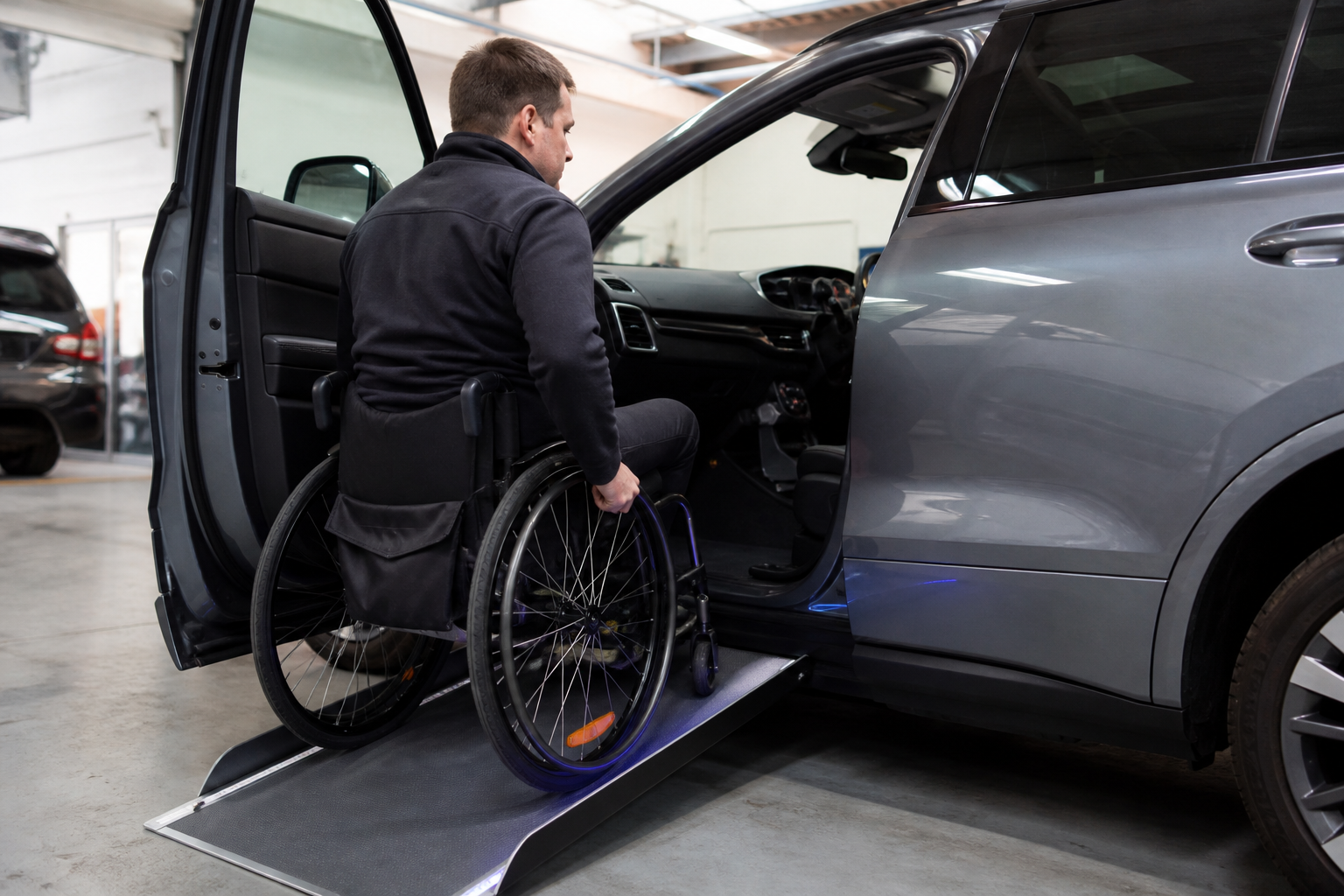
Not every enquiry that starts with “wheelchair hoist” ends with a wheelchair loading solution. If the biggest challenge is getting into or out of the vehicle, a person hoist, swivel seat or other transfer aid may be more appropriate. That is why we assess the whole journey, from transfer to driving position to storage.
When a boot hoist is often the better choice
A boot hoist can be a strong option when you want the wheelchair stored inside the vehicle and you are comfortable accessing the boot area.
You can transfer into the driver’s or passenger seat, but loading the chair by hand is difficult.
You want the wheelchair kept inside the vehicle rather than on the roof.
Your vehicle has the space and access needed for safe loading.
Another driver or family member also uses the car and a roof system is not the most practical fit.
You want a solution matched to your current vehicle and your day-to-day routine.
Boot hoists can be especially useful where the problem is awkward lifting, twisting or handling weight at arm’s length. The key is making sure the hoist, wheelchair and vehicle work together safely.
If you are already researching wheelchair hoists for cars and vehicle adaptations, we can help you look beyond brochures and focus on what will actually work in daily use.
When a roof stowage system may be the better fit
Roof stowage systems are often considered by drivers who use a manual wheelchair and want a loading routine that stays close to the driver’s door.
You use a manual wheelchair rather than a larger powered chair.
You want to keep more boot space available for passengers, shopping or other equipment.
Reaching deep into the boot or walking to the rear of the car adds strain to each journey.
You travel alone regularly and want a system designed around independence.
You want a solution that fits alongside other driving aids or access adaptations.
That said, roof stowage is not automatically the right answer just because it looks neat. Vehicle height, the wheelchair size, transfer technique and the overall loading path all matter. A system that feels simple in theory still has to be practical every single day.
How to choose a wheelchair hoist for car use
The right choice is usually clear once the right questions have been answered. This is what we focus on during a consultation.
1. What wheelchair are you loading?
Manual and powered wheelchairs create very different fitting considerations. We need to understand the size, shape and how the chair folds or stores. Even two manual chairs can differ enough to affect which system is practical.
2. What vehicle do you drive?
Boot opening size, bumper height, interior shape and available mounting space all influence the answer. A solution that suits one hatchback, SUV or MPV may not suit another in the same way.
3. Which movements are difficult for you?
The aim is not simply to add equipment. It is to reduce the exact movement that causes difficulty, whether that is lifting, bending, twisting, reaching or walking around the car. A well-matched system should make your routine more manageable, not add new awkward steps.
4. Do you drive alone, or with help?
If you regularly travel alone, independence may be the top priority. If a family member or carer is usually present, the most practical solution may be different. We take real-life use into account, not just the vehicle specification.
5. What else needs to fit in the car?
Passengers, luggage, shopping, dogs, work equipment and day trips all matter. The right installation has to support normal life, not just the wheelchair.
6. Are there other adaptations you should consider at the same time?
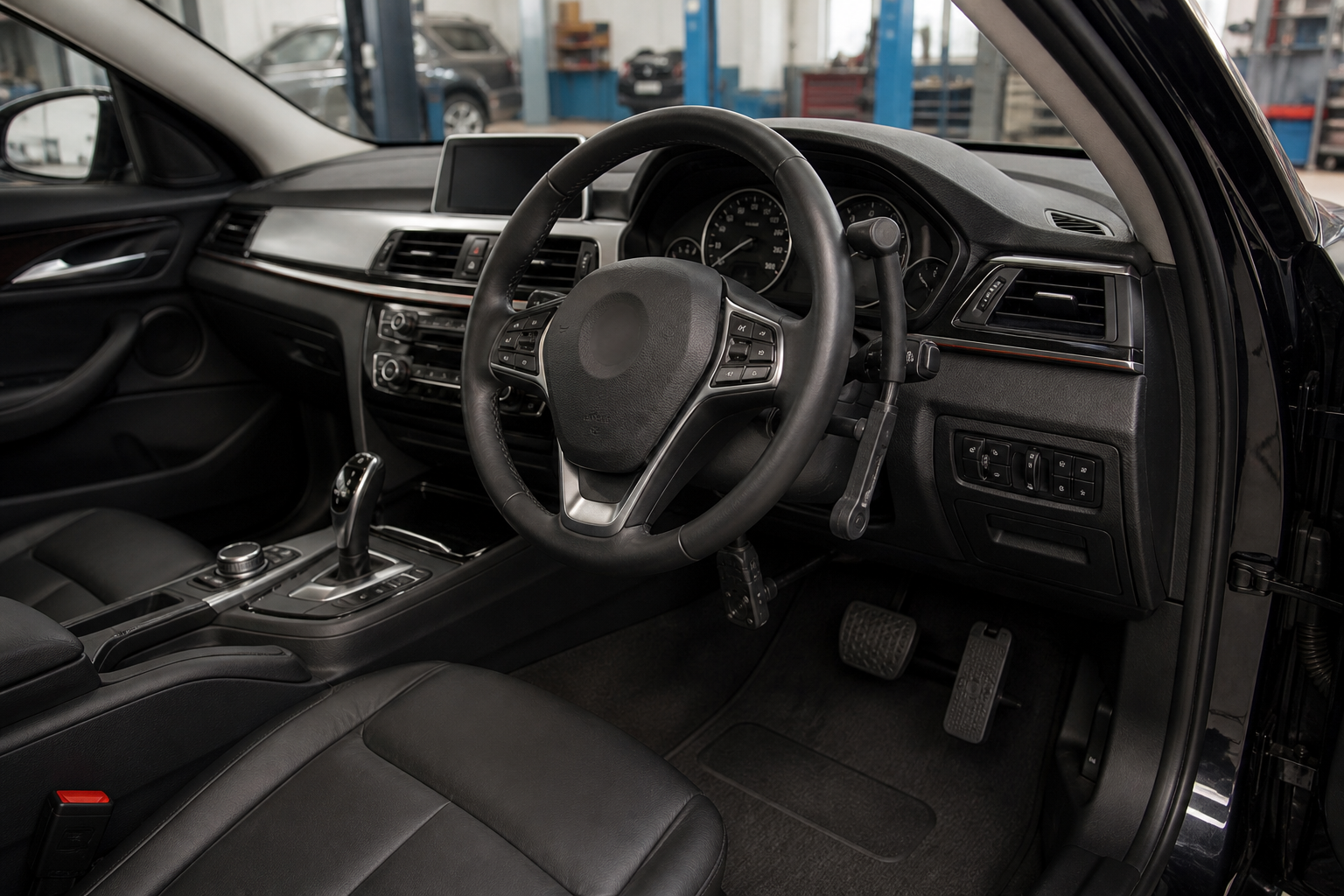
Sometimes a loading solution works best as part of a wider plan. For example, customers may also be exploring driving aids and mobility vehicle adaptations such as hand controls, steering aids, left foot accelerators, swivel seats or drive from wheelchair options. Looking at the full picture can lead to a better long-term outcome.
Why professional assessment matters
It is very easy to focus only on the product name and miss the practical details that decide whether a system truly suits you. In our experience, the most important questions are often the everyday ones.
Can you reach and operate the system comfortably?
Will the wheelchair load without awkward manoeuvres?
Does the installation preserve the space you still need?
Will the routine still work in poor weather, car parks and busy day-to-day situations?
Does the system still make sense if your mobility changes further?
That is why we take a consultation-led approach. We look at your mobility, the vehicle you use, the equipment you need to transport and the routine you want to make easier. From there, we can advise on a suitable direction rather than pushing a one-size-fits-all answer.
Why customers choose PB Conversions Ltd
We are a specialist mobility adaptation business based at Unit 1-2 Clipstone Brook Ind Est, Cherrycourt Way, Leighton Buzzard, LU7 4GP. We were established in 2001, and PB Conversions Ltd was set up by Paul Berridge, who has over 30 years of experience within the mobility industry and car adaptations.
Customers choose us because they want practical guidance, quality workmanship and a personal, professional service.
Free initial consultation
Free quotes
Free annual servicing on adaptations we supply
Free parking at our Leighton Buzzard unit
ISO 9001 accredited
Members of AVAM, the Association of Vehicle Adaptation Manufacturers
From our Leighton Buzzard base, we support customers with car adaptations and wheelchair-accessible vehicle solutions across Bedfordshire, Buckinghamshire and surrounding areas.
Book a free consultation and quote
If you are trying to decide between a vehicle hoist and a roof stowage system, the quickest route to clarity is a proper discussion about your wheelchair, your vehicle and your usual journey pattern.
We offer a free initial consultation and free quote, so you can explore the right setup before committing to an installation. We can also advise if a different adaptation, such as a person hoist or transfer aid, may be more suitable for your needs.
Call PB Conversions Ltd on 01525 850588 or visit our website to get started.
Frequently asked questions
What is the difference between a wheelchair hoist and a roof stowage system?
A wheelchair hoist usually lifts mobility equipment into the vehicle, most often into the boot area. A roof stowage system usually stores a manual wheelchair in a roof-mounted box. Both solve loading problems, but they do it in different ways.
Can any wheelchair hoist be fitted to any car?
No. Suitability depends on the vehicle layout, boot access, mounting options and the wheelchair being loaded. That is why an assessment is important before any installation is recommended.
Is a roof stowage system only for manual wheelchairs?
Roof stowage is most commonly considered for manual wheelchairs. If you use different equipment or a larger chair, another solution may be more appropriate.
How do I know whether I need a wheelchair hoist or a person hoist?
If the main difficulty is loading the wheelchair after you have transferred into the seat, a wheelchair hoist or roof stowage system may be the answer. If the biggest issue is transferring into the vehicle itself, a person hoist or another access adaptation may be more suitable.
Can PB Conversions help me choose the right system?
Yes. We provide consultation-led advice from our specialist unit in Leighton Buzzard, along with free quotes and free initial consultations. We focus on what suits your mobility, vehicle and daily routine.
Final thoughts
Choosing a wheelchair hoist for a car is really about choosing the loading routine that fits your life. The right answer depends on far more than weight or product type. It depends on your wheelchair, your vehicle, your transfer technique and what feels practical every day.
If you want expert, straightforward advice, speak to PB Conversions Ltd. We will help you explore whether a boot hoist, roof stowage system or another adaptation is the right fit, then guide you towards a solution that is built around how you actually travel.
Comments