
Drive From Wheelchair Vehicles: What Adaptations Are Needed and Who Are They Best For?
If you are researching drive from wheelchair vehicles, you are probably not looking for a generic mobility solution. You are looking for a safe, practical way to travel independently without a difficult transfer into a standard driver’s seat. For many people, that can make everyday travel far more manageable.
At PB Conversions Ltd, we help customers understand which vehicle adaptations may suit their mobility, their wheelchair and their day-to-day routine. From our specialist unit in Leighton Buzzard, we provide free quotes, a free initial consultation and professional advice shaped around real-world use.
In this guide, we explain what drive from wheelchair vehicles are, what adaptations they typically need, and who they are best suited to.
What are drive from wheelchair vehicles?
Drive from wheelchair vehicles are adapted vehicles that allow the driver to enter, position themselves and control the vehicle while remaining in their wheelchair. That makes them different from a standard wheelchair accessible vehicle, which may only be configured for travelling as a passenger.
For the right driver, this type of setup can remove one of the biggest barriers to independent travel: transferring from wheelchair to seat before every journey. It can also reduce physical strain, simplify routine journeys and create a more repeatable driving position.
It is important to understand that not every accessible vehicle is automatically suitable for driving from the wheelchair. The vehicle, the wheelchair, the driver’s movement, and the control system all need to work together safely.
What adaptations are needed for drive from wheelchair vehicles?
The exact answer depends on the individual, but most drive from wheelchair vehicles need a combination of access adaptations, driving controls and usability features.
1. Safe wheelchair access into the vehicle
The first requirement is a reliable way to enter and leave the vehicle without unnecessary strain.
Depending on the vehicle and the user’s needs, that may include:
Ramps for managed access
Platform lifts where lifting support is needed
Radio remote systems to make access functions easier to operate
The aim is simple: entry and exit should be practical, consistent and suitable for everyday use, not just possible on a good day.
2. Driving controls adapted away from standard pedals
In many drive from wheelchair vehicles, standard pedal use is not realistic or safe. That is where adapted driving controls become essential.
Depending on the driver’s strength, coordination and range of movement, this may involve:
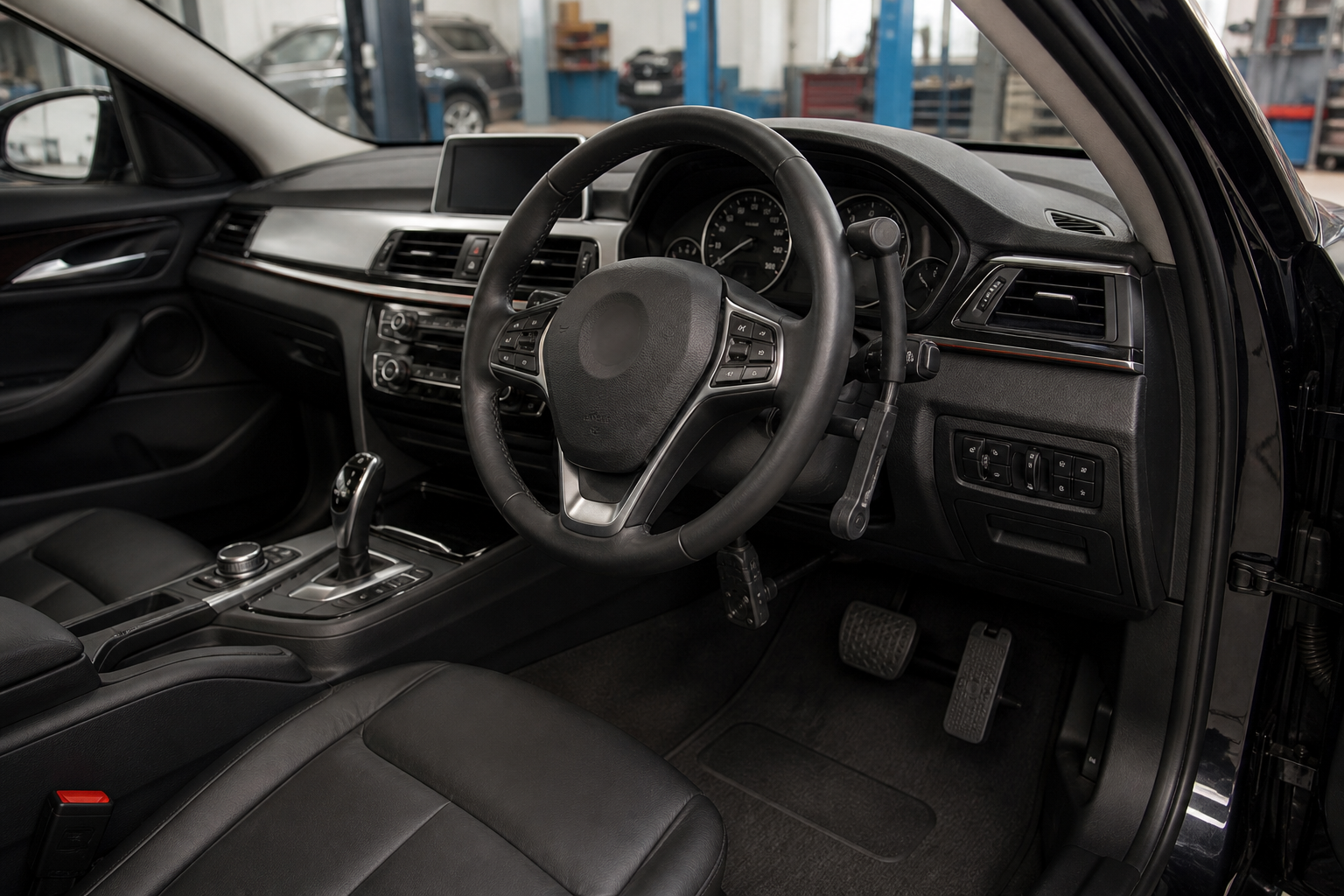
Hand controls for acceleration and braking
Steering aids to improve grip and one-handed control where appropriate
Lightened power steering to reduce effort
Lightened brakes where reduced force is needed
Advanced systems such as Space Drive for more complex requirements
Not every driver needs every option. The right combination depends on how you move, how far you need to reach, and which actions you can repeat comfortably and safely on every journey.
If you are also comparing alternatives, our broader range of hand controls and steering aids can be part of the conversation where a full drive from wheelchair setup is not necessary.
3. A repeatable driving position
A drive from wheelchair vehicle also needs to put the driver in a stable, comfortable position with clear visibility and safe reach to the controls. This matters more than many people realise.
Even small differences in wheelchair size, seating posture, upper-body movement or arm strength can change which vehicle layout is practical. A setup that looks workable in theory may feel tiring or awkward in daily use if the reach, turning circle or sight lines are not right.
That is why a bespoke approach matters. The goal is not just to make the vehicle operable. The goal is to make it comfortable and confidence-inspiring to use regularly.
4. Secondary controls that are easy to use
Driving is about more than steering, braking and accelerating. Indicators and other secondary functions still need to be easy to operate without distracting the driver or forcing awkward movements.
In a well-planned conversion, these details are considered early, not added as an afterthought. Good usability can make a significant difference to confidence on the road.
5. Everyday practicality
The best drive from wheelchair vehicles are not just technically adapted. They are practical for the journeys you actually make.
That includes thinking about:
How often the vehicle is used
Whether the journeys are local, frequent or longer distance
Whether family members or carers also travel in the vehicle
How much equipment needs to come with you
How easy the setup will feel in poor weather, tight parking spaces or busy daily routines
These practical points often shape the final recommendation just as much as the control system itself.
Who are drive from wheelchair vehicles best for?
Drive from wheelchair vehicles are usually best for people who need to remain in their wheelchair to drive, rather than transferring into a standard seat first.
Drivers who cannot transfer safely or consistently
If transferring in and out of the driver’s seat is difficult, painful, unpredictable or unsafe, a drive from wheelchair solution may be worth exploring. For some drivers, transfer is technically possible but too tiring or unreliable to be a realistic long-term option.
Drivers with complex or progressive mobility needs
Where mobility is limited across several areas rather than just one, a more integrated setup may make better sense. For example, some drivers may need accessible entry, adapted braking and acceleration, and reduced steering effort together rather than a single stand-alone adaptation.
People who need straightforward daily independence
Some customers are focused on one outcome above all else: being able to get out independently for work, appointments, shopping, family commitments and social life without needing help for each journey. A well-matched drive from wheelchair conversion can support that independence in a direct and practical way.
When another adaptation may be enough
Not everybody who has mobility difficulties needs a full drive from wheelchair vehicle. If you can transfer comfortably and consistently, a simpler option may sometimes be more practical.
Depending on your needs, that could include:
Hand controls
Left foot accelerator installation
Swivel car seats
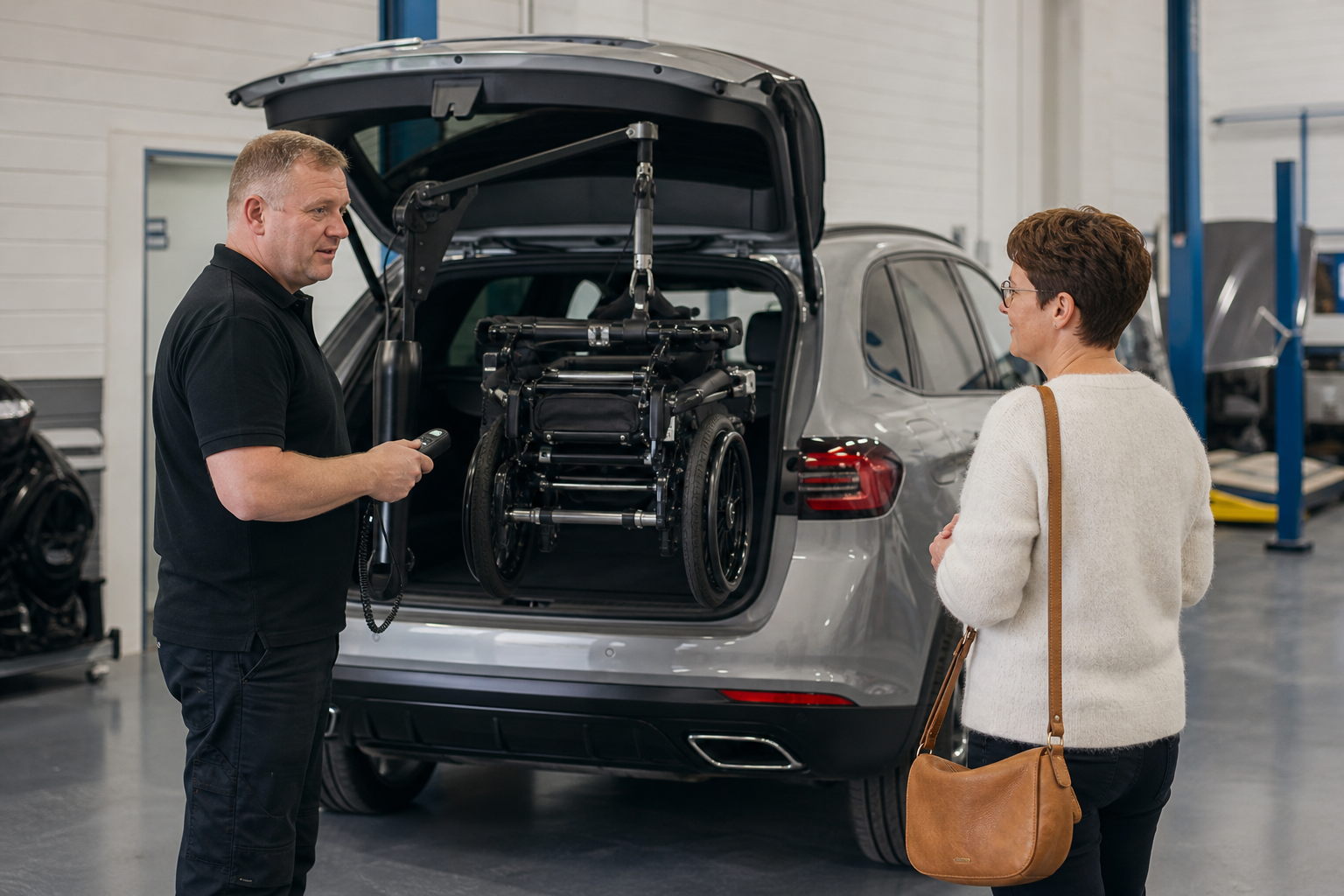
Hoists
Vehicle seating adaptations
That is one reason we always recommend discussing your situation properly before making a decision. In some cases, a different type of drive from the wheelchair service or a less extensive adaptation route may suit you better.
Key questions to ask before choosing a drive from wheelchair solution
If you are at the research stage, these are some of the most useful questions to ask.
Can I achieve a safe and comfortable driving position in my wheelchair?
The answer affects vehicle choice, access method and control layout.
Which controls do I need to operate by hand?
Some drivers need braking and acceleration moved to the hands. Others may also need help with steering effort or secondary controls.
Will anyone else use the vehicle?
If a family member or carer may also need to use the vehicle, that can influence the adaptation approach and vehicle layout.
How easy will the setup be to use every day?
A good conversion should work in real life, not just in ideal conditions. Repetition, comfort and ease of use all matter.
What support is available after installation?
Aftercare matters with specialist adaptations. PB Conversions offers free annual servicing on adaptations supplied to customers, which can be valuable for long-term confidence and upkeep.
Why professional fitting matters
Drive from wheelchair vehicles are highly individual. Small measurement differences, control positioning and usability details can have a major effect on comfort and confidence.
At PB Conversions Ltd, we specialise in vehicle mobility adaptations for people with disabilities from our specialist unit in Leighton Buzzard, LU7 4GP. We were set up in January 2001 by Paul Berridge, who has over 30 years of experience within the mobility industry and car adaptations.
Customers also come to us because we offer:
Free quotes
Free initial consultation
Free annual servicing on adaptations
Free parking at our unit
A personal and professional service
We are ISO 9001 accredited and members of AVAM, the Association of Vehicle Adaptation Manufacturers. That matters when you are choosing specialist work that needs to be fitted carefully and tailored correctly.
We are based in Leighton Buzzard and support customers across Bedfordshire, Hertfordshire and surrounding areas.
FAQs about drive from wheelchair vehicles
What is the difference between a wheelchair accessible vehicle and a drive from wheelchair vehicle?
A wheelchair accessible vehicle may allow a wheelchair user to travel in the vehicle as a passenger. A drive from wheelchair vehicle goes further by allowing the person to remain in their wheelchair and operate the vehicle as the driver.
Do all drive from wheelchair vehicles need hand controls?
Many do, but not all setups are identical. The exact control package depends on the driver’s movement, strength, coordination, reach and the vehicle layout. Some drivers may also need steering aids, lightened controls or advanced electronic systems such as Space Drive.
Who are drive from wheelchair vehicles best for in the UK?
They are typically best for drivers who cannot safely or consistently transfer into a standard driver’s seat, or whose mobility needs are complex enough that an integrated wheelchair-based driving setup is the most practical option.
Can my current vehicle be adapted for driving from my wheelchair?
Sometimes, but it depends on the vehicle, the wheelchair dimensions and the type of adaptations required. In some cases an existing vehicle may be suitable. In others, a different base vehicle may be the better route. A specialist consultation is the right place to start.
Where can I get advice on drive from wheelchair vehicles near Leighton Buzzard?
PB Conversions Ltd is based in Leighton Buzzard and offers free quotes and a free initial consultation. If you want practical guidance on adapted driving options, you can speak to our team about your requirements and next steps.
Speak to PB Conversions Ltd about drive from wheelchair vehicles
If you are exploring drive from wheelchair vehicles, the most important step is choosing a solution that fits your mobility, your vehicle needs and your daily routine. A full conversion can be the right answer for some drivers, but the details matter.
To discuss your options, arrange a free quote with PB Conversions Ltd at our specialist unit in Leighton Buzzard. Call 01525 850588, email Info@pbconversions.co.uk, or visit our website to take the next step.
Comments